60° and Patchy rain nearby
Image



As winter recedes across Minnesota and temperatures begin their slow climb into spring, a familiar transition takes place across neighborhoods, parks, sidewalks, and school communities. Children return outdoors. Basketball hoops reappear at the ends of driveways. Scooters roll back onto sidewalks. Bikes emerge from garages after months of storage. Families begin spending longer hours outside again.

Inside emergency departments, another seasonal pattern begins to emerge alongside it.
For trauma teams and emergency room clinicians across the state, the arrival of warmer weather is not simply a lifestyle shift. It marks the beginning of a period in which preventable injuries involving children begin to rise again. Bicycle crashes, falls, scooter injuries, playground accidents, sports collisions, and other outdoor-related trauma become a recurring part of emergency department operations during the spring and summer months.
At North Memorial Health’s Maple Grove Hospital, Robin Trubeck sees those patterns up close.
Trubeck serves as Trauma Program Coordinator at Maple Grove Hospital, a Level IV trauma hospital within the North Memorial Health system. Her work exists at the intersection of emergency medicine, operational oversight, public safety education, and injury prevention. With two decades of nursing experience and a background in emergency department care, she now helps oversee trauma-related operations while also participating in community outreach initiatives designed to reduce preventable injuries before they occur.
In a recent conversation with MinneapoliMedia as part of the publication’s Community Interview Series, Trubeck discussed pediatric injury trends, helmet use, e-bike safety concerns, sports-related head trauma, and the growing role trauma programs are playing in public prevention efforts across Minnesota communities.
The conversation was grounded less in institutional messaging than in practical realities. Throughout the interview, Trubeck repeatedly returned to one central theme: many of the injuries emergency departments see each year involving children are preventable.
That does not mean all injuries can be eliminated. Children will continue to play sports, ride bikes, and participate in outdoor activities. Risk is part of childhood and physical activity. But trauma clinicians increasingly view prevention not as an abstract public health campaign, but as a direct extension of emergency care itself.
The logic is simple. Every severe injury avoided is a child who never needs to enter the emergency room.
That perspective shapes much of the work Trubeck now oversees.
“My background is that I’m an emergency department trained nurse,” Trubeck said. “I’ve been a nurse for 20 years. My current role as trauma coordinator is managing anything trauma related with the emergency department. That includes education that’s trauma related, managing care and making sure we’re meeting all goals and measures, reporting that back to the Minnesota Department of Health, and making sure that we have a very well-run and efficient trauma program.”
Her comments arrive at a time when hospitals and public health agencies across the country continue to examine how injury prevention intersects with broader questions involving pediatric safety, recreational behavior, transportation changes, and public awareness.
The conversation also reflects how emergency departments increasingly operate not only as treatment centers, but as institutions attempting to intervene earlier in the injury cycle itself.
At Maple Grove Hospital, the scale of pediatric injuries remains significant even within the context of a smaller community trauma hospital.
“If you include biking injuries, e-bike accidents, scooters, falls from playground equipment, and all of the things kids are doing outside with sports and everything,” Trubeck said, “we see about 500 kids injured in our emergency department annually.”
That figure, while localized to one hospital, offers a window into the broader reality facing emergency departments during outdoor recreation season.
Those injuries range in severity. Many involve minor trauma. Others involve fractures, concussions, lacerations, and injuries requiring transfer to higher-level trauma centers. Maple Grove Hospital operates as a Level IV trauma facility, meaning it treats lower-acuity trauma while stabilizing and transferring more severe cases to larger centers equipped for advanced intervention.
That distinction matters when discussing pediatric injury statistics.
At Level I trauma centers, clinicians often see the most catastrophic cases involving traumatic brain injuries, severe internal injuries, spinal trauma, and complex multi-system injuries. At Level IV facilities like Maple Grove Hospital, the injury profile is different. Cases are generally less severe, though no less concerning from a prevention standpoint.
When asked about the number of bicycle-related injuries specifically, Trubeck estimated the hospital may see one bicycle injury per day or a couple each week during the active season, though she noted that many minor incidents never result in emergency room visits at all.
“I would say if you’re just excluding all injuries and only including bicycle injuries, that number would be a little smaller, probably maybe not as high as you’d expect,” she said. “We see a lot of minor injuries where people are not coming into the emergency room, but we see a lot of injuries including all outdoor activities, not just bicycling.”
One of the most significant themes to emerge during the interview involved helmet use and how clinicians assess preventable head trauma.
Public awareness campaigns around helmet safety have existed for decades. Yet emergency department workers continue to encounter problems involving inconsistent use, improper fitting, and incomplete understanding of how helmets function during impact events.
Trubeck said improper helmet use among children remains common.
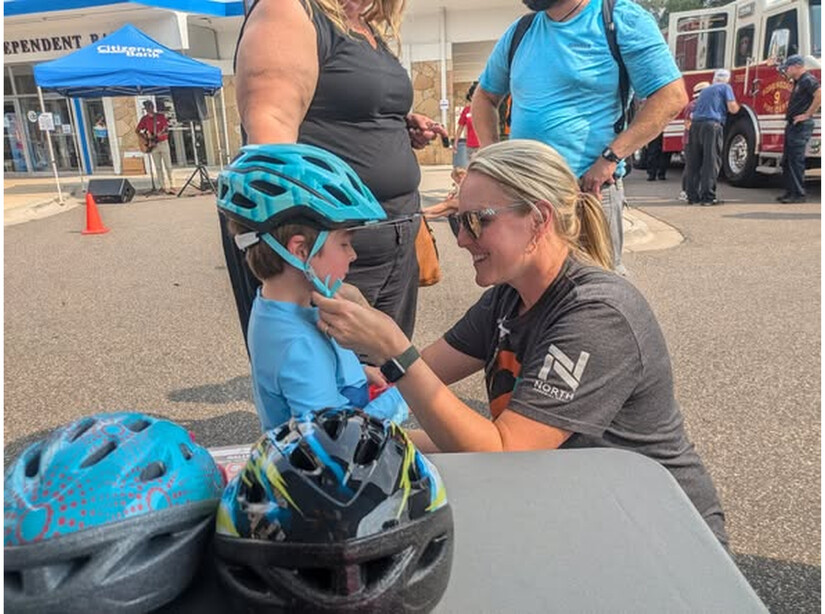
“They don’t like the chin strap,” she explained. “It’s not tight enough, or it’s pointed up at the sky instead of straightforward. If you aren’t wearing your helmet properly, it’s not doing you as much good.”
The implications of that improper fit can be significant during crashes involving pavement impact or collisions.
“Proper helmet use significantly reduces the risk of serious head injury,” she said. “You might still injure an arm or skin up a knee, but those things can heal just fine. You only get one brain.”
The phrase reflects a practical clinical perspective rather than rhetorical emphasis. In emergency medicine, head trauma involving children remains one of the most serious concerns clinicians encounter because of the potential for long-term neurological consequences.
Although Trubeck said many of the injured children she encounters are already wearing helmets when they arrive at the hospital, she also noted that growing awareness surrounding e-bikes and scooters appears to be increasing safety consciousness among families.
“I think helmet use across all outdoor activities has really increased,” she said, “especially with the use of e-bikes and these scooters that go quite a bit faster.”

That shift toward e-bikes and motorized scooters represents another evolving area of concern for trauma programs across Minnesota and nationally.
Unlike traditional bicycles, many newer recreational mobility devices can reach significantly higher speeds while often being operated by younger or inexperienced users. At the same time, injury tracking systems have struggled to separate e-bike and scooter incidents cleanly from broader motorized vehicle categories.
Trubeck said the Minnesota Department of Health is currently working to improve how those incidents are categorized and tracked.
“There is definitely concern,” she said. “We categorize them as motorized vehicle accidents, so it’s a little hard to separate them as e-bike versus another moving device. That’s a new way that we’re going to start tracking data so we can have better data to present to the public moving forward.”
The issue has become increasingly relevant nationwide as emergency departments report increases in injuries involving electric scooters, electric bicycles, and other motorized personal transportation devices.
Many of those injuries involve speed-related falls, collisions with vehicles, or riders operating equipment without helmets.
But bicycles and scooters are not the only sources of pediatric head injuries Trubeck discussed.
During the interview, she pointed to another area receiving increased attention from clinicians: soccer-related head trauma.
Soccer remains one of Minnesota’s most widely played youth sports. Unlike football, baseball, or hockey, however, soccer is largely played without head protection.
“We do see a lot of soccer injuries where kids are not wearing helmets in that sport,” Trubeck said. “Soccer is a very popular sport in Minnesota, and it’s an unhelmeted sport. There’s really no protective gear other than shin guards.”
She noted that increased physicality in the sport contributes to collisions and head injuries.
“When you’re doing headers or aggressively going toward the same ball, a lot of kids are running into each other,” she said. “We do see a few more head injuries from soccer just because they’re not as well protected as other sports are.”
Her comments reflect broader national conversations involving concussion awareness and sports-related brain injuries among young athletes. Over the past decade, medical institutions, athletic organizations, and school systems have significantly expanded concussion protocols and return-to-play procedures across youth sports.
Even so, many emergency department clinicians continue to view prevention education as essential because of how frequently pediatric head injuries remain tied to ordinary recreational activity.
That prevention work increasingly occupies a substantial portion of trauma program operations.
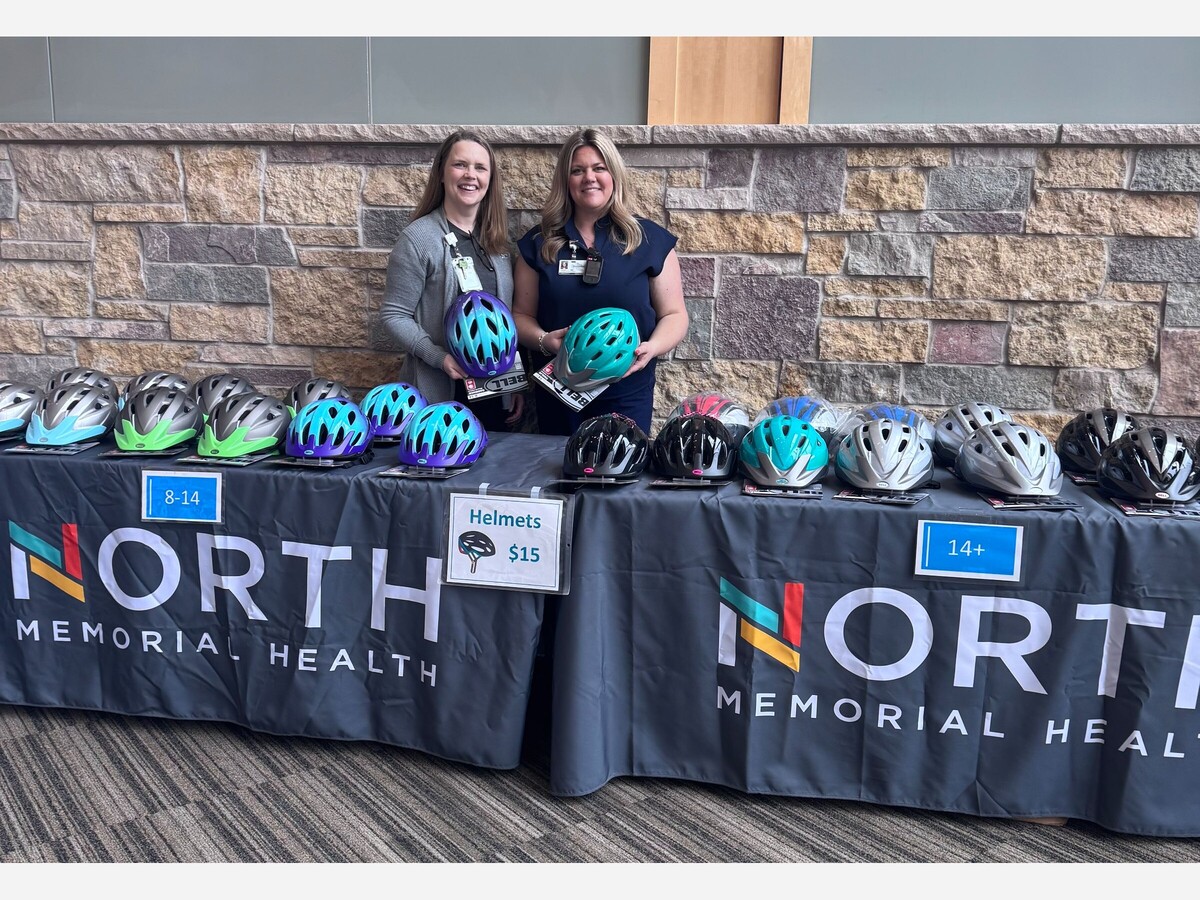
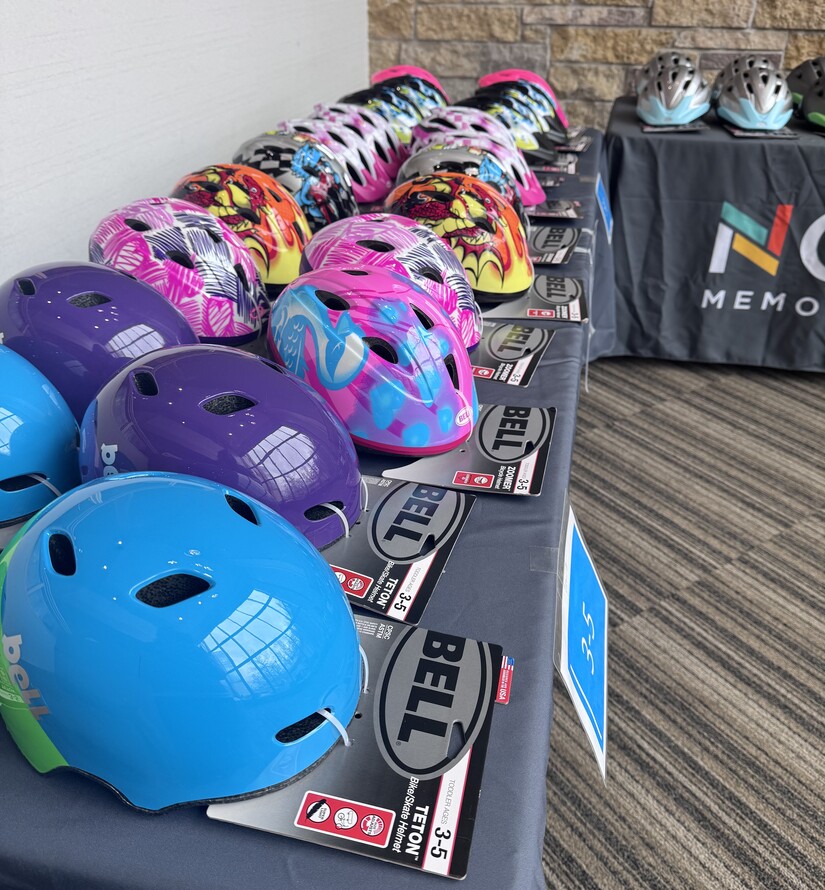
At Maple Grove Hospital, one of the most visible examples is the annual bike helmet fitting and sales initiative designed to provide families with discounted helmets and education regarding proper use.
The event, now entering approximately its fifth year, has distributed close to 400 helmets, according to Trubeck.
The program is structured around accessibility and injury prevention rather than profit generation. Families are able to purchase discounted helmets while also receiving assistance with proper fitting and safety guidance.
Trubeck said the event has gradually become recognized within the community.
“People have now been talking about it,” she said. “I can hear little chatter in the hallways and people asking when the bike helmet sale is coming.”
She described grandparents purchasing helmets for grandchildren and families returning annually as children outgrow old equipment.
“It’s really fun to see that it’s bringing families together and bringing families outside together,” she said. “A lot less head injuries and a lot more safety.”
The event also reflects how trauma programs increasingly frame prevention work as community engagement rather than isolated healthcare outreach.
That broader prevention framework extends well beyond bicycles.
During the interview, Trubeck outlined several additional injury prevention initiatives associated with North Memorial Health’s trauma programs.
One involves “Stop the Bleed” training, a nationally recognized program teaching civilians how to control severe bleeding during emergencies before professional responders arrive.
Another focuses on falls prevention among older adults through a program called “Stepping On,” which addresses balance, mobility, and environmental risk reduction. Falls remain among the leading causes of injury-related emergency department visits nationally, particularly among older populations.
Safe firearm storage education represents another prevention effort. So do water safety initiatives involving life jacket lending stations and education about visibility in swimming environments.
Trubeck also discussed pool safety education involving brightly colored swimwear for children.
“We talk about pool safety and wearing bright colored swimming suits and not a blue swimming suit that would blend in with the water,” she said.
Individually, each initiative addresses a different injury category. Collectively, they reflect how modern trauma programs increasingly operate as prevention-centered public health actors alongside their emergency care responsibilities.
The challenge, however, lies in measurement.
Emergency departments can measure injuries that occur. They can track admissions, transfers, surgeries, and fatalities. Prevention work operates differently because its success often exists in outcomes that never materialize.
When asked what proportion of her work focuses on prevention versus response, Trubeck paused.
“That is an excellent question,” she said. “That would be hard to say. If you’re preventing an injury, you’re not going to see that patient in the emergency department. So I don’t know how many people we’ve protected.”
Her answer captures one of the central realities of prevention-based healthcare work. Success frequently appears invisible.
The child who wears a properly fitted helmet and avoids traumatic brain injury never becomes part of a hospital statistic. The family that uses a life jacket correctly never appears in emergency room data. The teenager who learns proper crossing behavior never becomes a trauma activation.
And yet, from the perspective of trauma clinicians, those invisible outcomes represent the purpose of the work itself.
Toward the conclusion of the interview, Trubeck returned repeatedly to the number that seemed to resonate most with her own experience: approximately 500 pediatric injury visits annually at her community hospital alone.
“That’s 500 kids that could be safe if we can do anything,” she said.
The statement was not presented as blame directed toward parents or families. Rather, it reflected the perspective of someone who spends her professional life encountering injuries after they occur and recognizing how many involve risks that could have been reduced beforehand.
Her advice to parents was practical and behavioral rather than technical.
“As a parent, being a good role model and modeling good behavior,” she said. “If you wear your helmet, your children will not be arguing with you, and they will likely be wearing their helmet.”
She also emphasized teaching children to stop before crossing streets, cross at intersections instead of between parked cars, and use bright colors or lights to increase visibility.
The recommendations may appear basic. In emergency medicine, however, many prevention strategies are.
The complexity often lies not in understanding what reduces risk, but in sustaining those behaviors consistently over time.
As Minnesota moves deeper into spring and summer, emergency departments across the state will continue seeing pediatric injuries tied to outdoor recreation. Some will involve bicycles. Others will involve scooters, sports, playgrounds, pools, or falls.
The volume will vary by region, weather, and activity patterns. But the underlying reality will remain consistent.
Children will continue getting injured in ways that are often predictable.
Trauma coordinators like Robin Trubeck operate within that predictability every day. Their work involves not only treating injuries, but attempting to interrupt the conditions that produce them.
The significance of that work becomes easier to understand when viewed through the lens Trubeck repeatedly returned to throughout the conversation.
Every prevented injury represents a child who never needs to enter the emergency department at all.
And in trauma care, that absence may be the clearest measure of success available.
MinneapoliMedia | Community. Culture. Civic Life.



Partly Cloudy, with a high of 79 and low of 58 degrees. Cloudy for the morning, sunny in the afternoon, mist overnight.